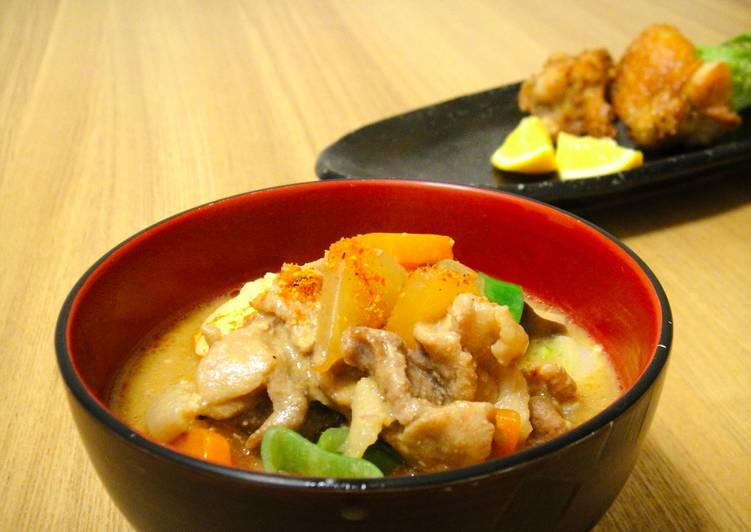
Hello everybody, it is Jim, welcome to my recipe site. Today, we’re going to prepare a distinctive dish, tonjiru : a miso based pork soup filled with vegetables. One of my favorites. This time, I will make it a little bit tasty. This will be really delicious.
Tonjiru : A miso based pork soup filled with vegetables is one of the most favored of recent trending foods on earth. It is appreciated by millions daily. It’s simple, it is quick, it tastes yummy. They’re nice and they look fantastic. Tonjiru : A miso based pork soup filled with vegetables is something that I have loved my whole life.
Tonjiru is a savory miso soup with pork and root vegetables. Packed with an excellent source of vitamins, it's absolutely nourishing and soul-fulfilling! If you ask me what is my favorite miso soup, I would immediately say Tonjiru (豚汁).
To get started with this particular recipe, we must first prepare a few components. You can have tonjiru : a miso based pork soup filled with vegetables using 14 ingredients and 15 steps. Here is how you can achieve it.
The ingredients needed to make Tonjiru : A miso based pork soup filled with vegetables:
- Prepare 5 cm Konbu(edible kelp) and 600 cc water
- Make ready 130 g Pork belly
- Prepare 3 cm Daikon Radish
- Prepare 3 cm Carrot
- Prepare 2 Shiitake mashrooms
- Make ready 1/4 Cotton tofu
- Make ready 1/4 Green onion
- Get 1 tbs Sesami oil
- Get pinch salt
- Make ready 2 tbs Miso
- Prepare 1/2 tsp Soy sauce
- Prepare 1/2 tsp Mirin
- Take 1 tbs Sake
- Take Japanese 7 spice mixture (Shichimi togarashi) as you like
Konnyaku is also pretty common, and you. Tonjiru (or Butajiru) is a kind of Miso Soup with pork and a lot of root vegetables such as Gobo (burdock root) and carrot. Even though it is a Miso Tonjiru has a distinct pork flavor and strong taste from Gobo. Don't get alarmed because of Gobo, it actually tastes very good.
Instructions to make Tonjiru : A miso based pork soup filled with vegetables:
- Soak the Konbu in the water and let it stand 10 hours in the refrigerator.
- Peel the Daikon radish and carrots, cut them into 4 wedges each and cut the wedges into 5mm slices.
- Cut the pork into 5cm strips.
- Remove stem of the mushrooms and cut the cap into thin slices.
- Cut the naganegi-onion into 5 mm slices.
- Pluck off the tofu by hand into bite sized pieces and put in the boiling water for 2 minutes. Take it out, let it cool.
- Put 1 tbs of sesame oil into a pot then place on medium heat. Add the pork and fry until the color is white.
- Add the daikon radish, carrots and add a pinch of salt. Fry the ingredients for 1 minute.
- Add 1 tbs of sake, change the heat to low. Cover with a lid and let it simmer for 3 minutes.
- Change the heat to high and add Konbu along with the water it was soaking in. Add shiitake mushrooms.
- Let the dish simmer and remove the Konbu just before it starts to boil.
- Dissolve 1 tbs of miso into the pan and change the heat to low, then let it simmer for another 10 minutes.
- Add tofu and let it simmer for 10 minutes.
- Add naganegi onion, 1/2 tsp of soy sauce, 1/2 tsp of mirin, 1 tbs of miso. Turn off the heat just before it starts to boil.
- If you have time, let it cool and heat one more time before you eat. This will make the ingredients really soak up the flavor of the soup!
All the flavor of the pork. The traditional tonjiru is made with tofu, miso, and dashi stock, combines pork with vegetables such as daikon, burdock, sweet potato, and konnyaku. The whole tonjiru dish is very comforting in this cold winter weather. I threw in some wakame seaweed in the soup as well. Unlike miso soup, which usually contains things like seaweed and tofu, tonjiru instead includes many hearty root vegetables.
So that’s going to wrap it up for this exceptional food tonjiru : a miso based pork soup filled with vegetables recipe. Thanks so much for reading. I’m sure you will make this at home. There’s gonna be more interesting food at home recipes coming up. Remember to save this page in your browser, and share it to your loved ones, colleague and friends. Thanks again for reading. Go on get cooking!